

After moving from Tennessee to Minnesota in 2014, Amanda Harvey starting riding fat bikes and racing winter ultras in an effort to embrace winter. This week, she will head to Alaska to race her 10th winter ultra: the Iditarod Trail Invitational.
I caught up with Amanda after Arrowhead 135. This year, Amanda raced Arrowhead 135 “unsupported,” which meant that, while most Arrowhead participants stopped at aid stations to warm up and refuel, Amanda was entirely self sufficient. She carried all of her food and boiled snow for water.
In our conversation, Amanda shared why she chose to race Arrowhead 135 “unsupported,” what enabled her to finish Arrowhead this year after two unsuccessful attempts, and why she races winter ultras despite the inherent risk involved.
Why did you first start racing winter ultras?
I used to really hate winter. When my husband and I moved back to Minnesota from Tennessee in 2014, we made a deal to not complain about the weather. Instead of complaining, we found activities to do outside that we couldn’t do in the summer. I started racing fat bikes and discovered winter ultras. Races like Arrowhead 135 sounded like adventures, and I’m always down for an adventure.
This year, you raced Arrowhead 135 “unsupported.” What sounded fun or rewarding about tackling Arrowhead 135 without support from aid stations?
I try to be as self sufficient as possible in winter ultras, so racing “unsupported” was a challenge I felt ready to take on. One of my favorite aspects of winter ultras is the skill challenge: melting snow for water, setting up a campspot for a few hours etc. These are the challenges I enjoy more than finishing fast.
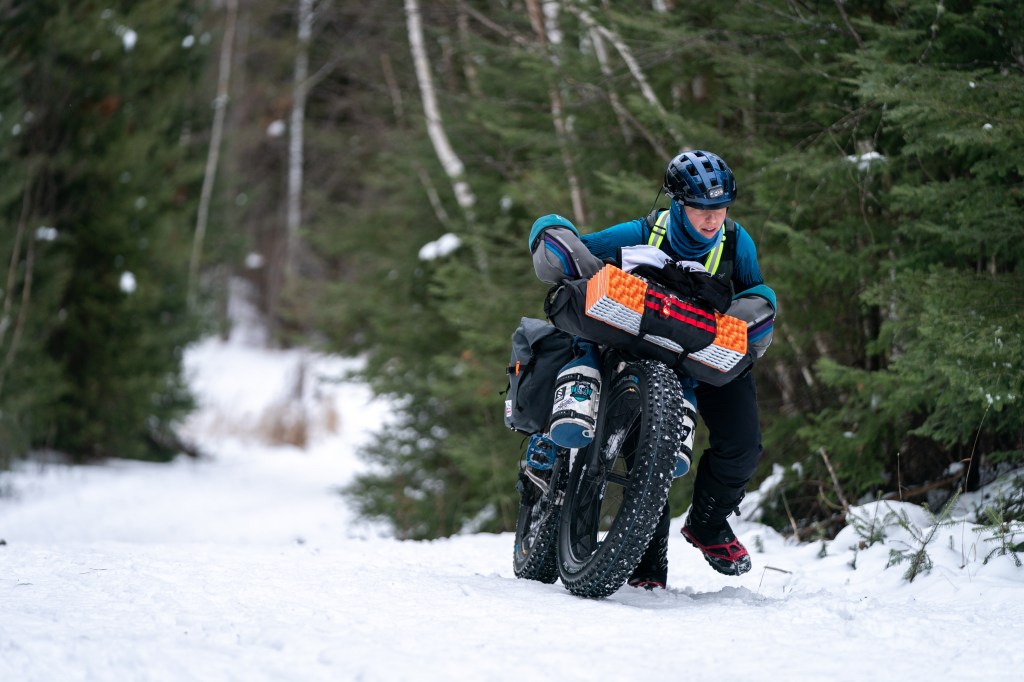
You’ve DNFed Arrowhead 135 “unsupported” once. What led to the DNF in 2023? What was the ticket to finishing this time?
I’ve DNFed “unsupported” twice actually! In 2022, I was having a great ride until about 100 miles in when I caught a rut on a downhill and fell hard on my head. I received a mild concussion, and, after falling again on the next hill, I determined it wouldn’t be safe for me to finish the race. So, I made my way slowly to the Embark checkpoint (mile 110) and dropped.
Last year, I dropped at Gateway aid station (mile 36) due to knee pain that had been plaguing me for about six months at the time. I thought I had it sorted out with PT, but my knee pain came back strong the week before the race. I didn’t want to get myself into too big of an injury hole before my first ITI [Iditarod Trail Invitational], so I decided to drop.
The ticket to finishing this year was to get a bike fit done! Paulie at GOPhysio did my fit, and I haven’t had knee pain since. Showing up to his office in my winter boots on my fat bike was a bit awkward, but getting accurate measurements is important.

Now that you’ve completed Arrowhead 135 “unsupported,” what’s next?
Later this month, I will start my second attempt at the ITI 350 mile. I had a bit of a mechanical disaster last year, so hopefully I can turn it around this year. Eventually, I would love to try for the ITI 1000 mile and make my way to Nome. Alaska is such a big, beautiful, dynamic place.
Some people are scared of trying winter ultras due to the risk of frostbite. Are you concerned about frostbite? What would you say to someone hesitant to try a winter ultra because they see winter ultras as too risky?
If anyone is uncertain about trying winter ultras because they’re too risky, my usual response is that life is risky. You can be doing everything right in life and be taken out by something sudden and unexpected. You might as well live as much as you can because you don’t know what will happen tomorrow. For me, I love adventure, winter, and trying hard things. For others, it might be riding their first 100 miler or beginning singing lessons or moving to a new city. We have to live with some level of risk, otherwise we aren’t living.
With that in mind, I do a lot to try to mitigate the risks and enter winter ultras with as much knowledge as possible. I have wilderness first aid certification. I have taken bike maintenance classes. I practice the camping skills needed for Arrowhead 135. But honestly, the most dangerous part of Arrowhead 135 is any training ride I do on the road with cars.
The most dangerous part of Arrowhead 135 is any training ride I do on the road with cars.
Frostbite is a concern everyone living in the cold should take seriously. Last year at Arrowhead, I got frostbite on my tummy. The start of the race was -25°F air temperature with a slight breeze. My base layer was a full zip wool jersey and I believe cold air got in through the zipper. I wasn’t paying attention to how my belly felt because I was focused on adjusting the layers on my hands and feet since they were so, so cold. If a part of you is painfully cold, stop and address it right away.
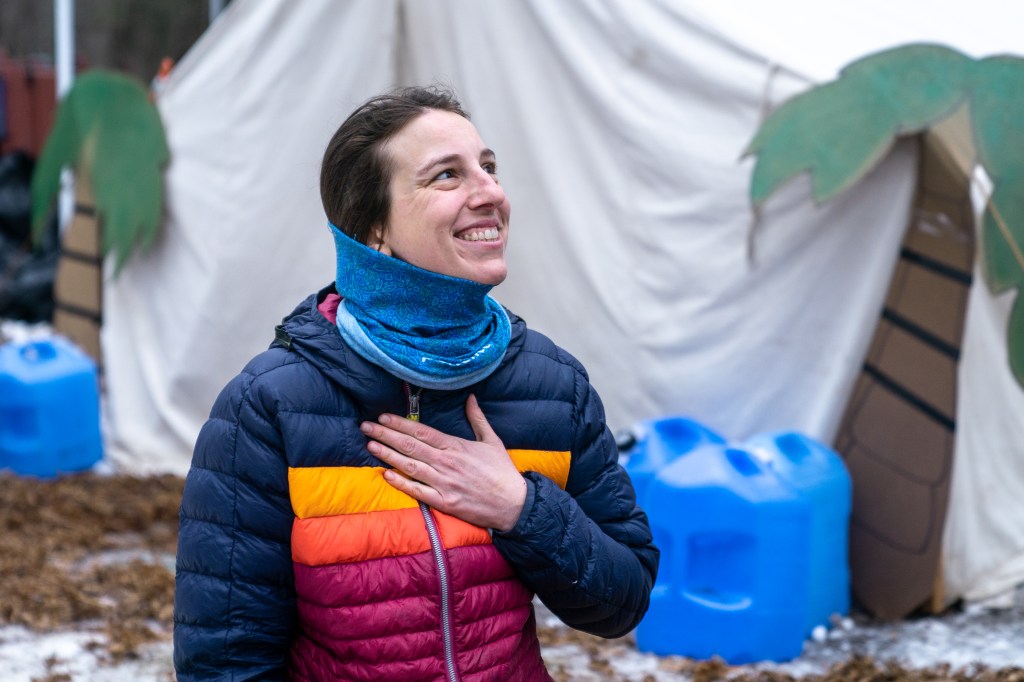
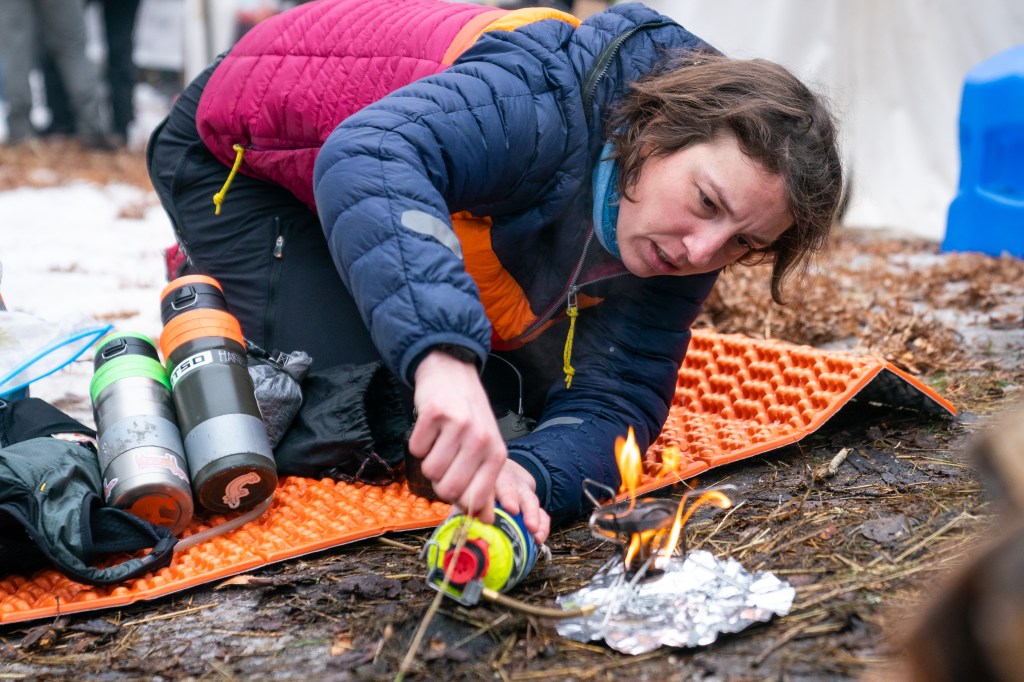
You volunteered at St. Croix 40 this year. During St. Croix 40, participants are required to boil water midway through the race, and you were responsible for watching participants start their stoves and boil water. What were the most common mistakes participants were making? What tips would you give for boiling water?
Volunteering at the St. Croix 40 checkpoint is such a joy!
The most common mistake I saw was folks using cold lighters. Keeping a lighter with your cook kit is handy, but the lighter will work better if it’s warm. I keep mine on a string around my neck. The next most common mistake I saw was not having a backup firestarter. …and two additional cold BIC lighters won’t cut it.
The biggest tip I can give is to be familiar with your stove and practice a lot in a variety of conditions. Some folks struggled to get their canister fuel stoves to work in the cold, while other folks had tricks to make them function well in the cold temperatures. Also, put a lid on your pot.
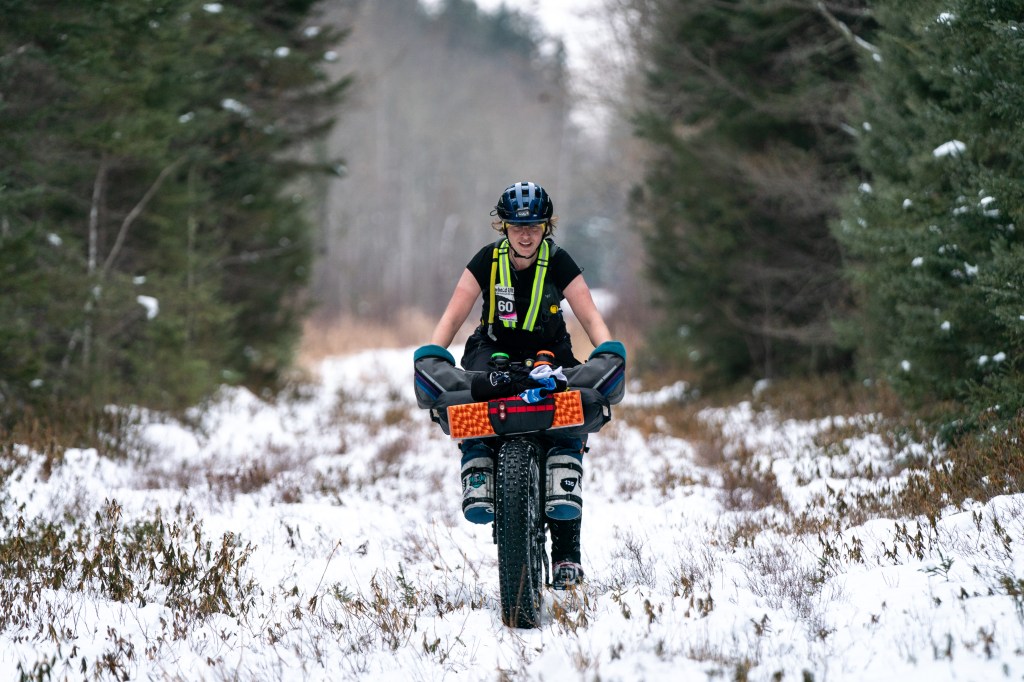
What role has Wild Winter Women or WWW played in your winter ultra experiences?
I would not be here if it weren’t for other WWW introducing me to this world and inviting me in. Reading about Sveta’s Arrowhead 135 while breastfeeding, being invited to share a cabin with Kristine and friends at the first St. Croix 40, being given a free entry to a race by Chelsea… These were my first steps into the winter ultra world. Seeing other women and non-binary friends strive for big goals, try hard things and share their stories has been so motivating to get me out of the house and into the world.
I would not be here if it weren’t for other WWW introducing me to this world and inviting me in.
I love that these races are mass start and equal distance for all genders. I grew up trying to keep up with and be as good as my three older brothers. Racing bikes on the road or track with shorter distances than men put me back in that “I’m not good enough” mentality. WWW has provided an essential safety net within the wider community of winter ultra athletes.
Will you be returning to Arrowhead 135? Why or why not?
Returning to Arrowhead 135 isn’t in my immediate plans. There are other winter races to try and camping trips to take. My husband would like to travel somewhere warm during the winter someday. But, I love the Arrowhead 135 people and landscape, so I can see coming back to support a friend or volunteer.

 Onward
Leave a comment