
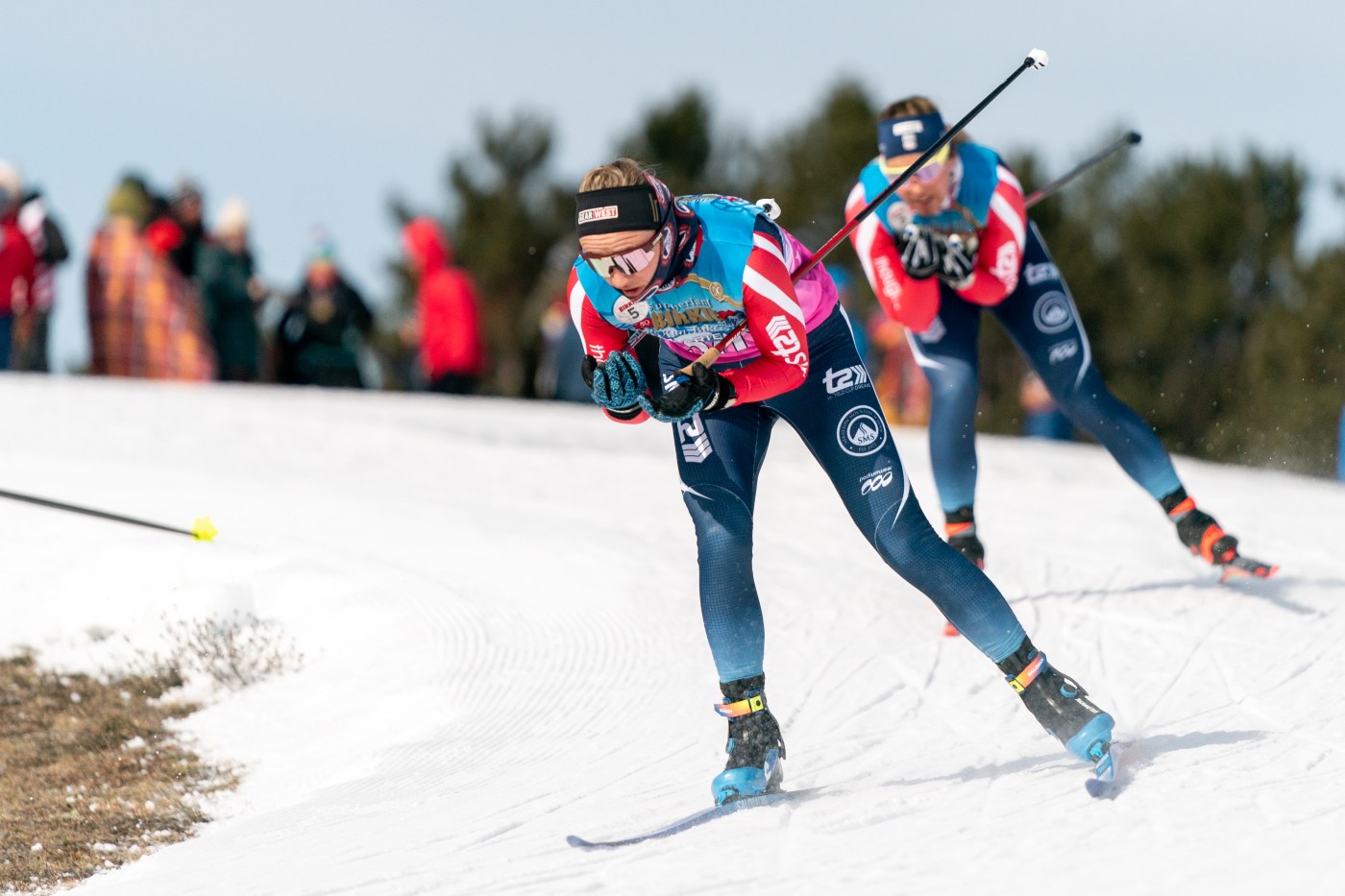
Alayna Sonnesyn is a professional nordic skier who has excelled at racing ski marathons. Alayna is a four-time winner of the American Birkibeiner or “Birkie”, was the youngest Birkie winner at age 22, and raced the very first women’s World Cup 50k. Alayna grew up outside Minneapolis, Minnesota, and now trains in Stratton, Vermont, with Jessie Diggins, Julia Kern and the rest of the SMS Nordic Team.
Historically, women have raced shorter distances than men in both college and international nordic ski races. However, that changed last year when the National Collegiate Athletic Association (NCAA) and International Ski Federation (FIS) adopted equal distance policies. As a result, for the first time ever, a women’s 50k was included in the FIS World Cup circuit, and Alayna was one of four U.S. women given the opportunity to race the 50k distance on the world stage.
I caught up with Alayna after a historic week in U.S. nordic skiing, during which Alayna raced the Minneapolis World Cup and the Birkie in front of enthusiastic home crowds.
We discussed whether Alayna wishes she could have skied the same distances as men in college, what it was like to be part of the first women’s World Cup 50k, and her biggest advice for those considering stepping up to the ski marathon distance.
This past week was a big one for U.S. nordic skiing… and for you! First, you raced the Minneapolis World Cup — the first World Cup race on U.S. soil in more than 20 years. Then, you raced your fifth American Birkibeiner and were joined by first-timers Jessie Diggins, Gus Schumacher and others who do not normally have the opportunity to race the Birkie.
What was this past week like for you?
It was so fun. I feel like I’m coming off an emotional high. The U.S. cross country community showed up and impressed everyone and took my breath away and left me a little bit awe struck of what the community can do and how much passion there is behind it. It was a little bit of a whirlwind the last two weeks, but in the best way possible. I just had so much fun and kept looking around and smiling because there was so much happiness and excitement and joy from everyone. It was very contagious. I’m still floating on cloud nine.
Awesome! I was at both events as a spectator, and I can only imagine what it was like to be at these events as a skier. It was very fun to spectate.
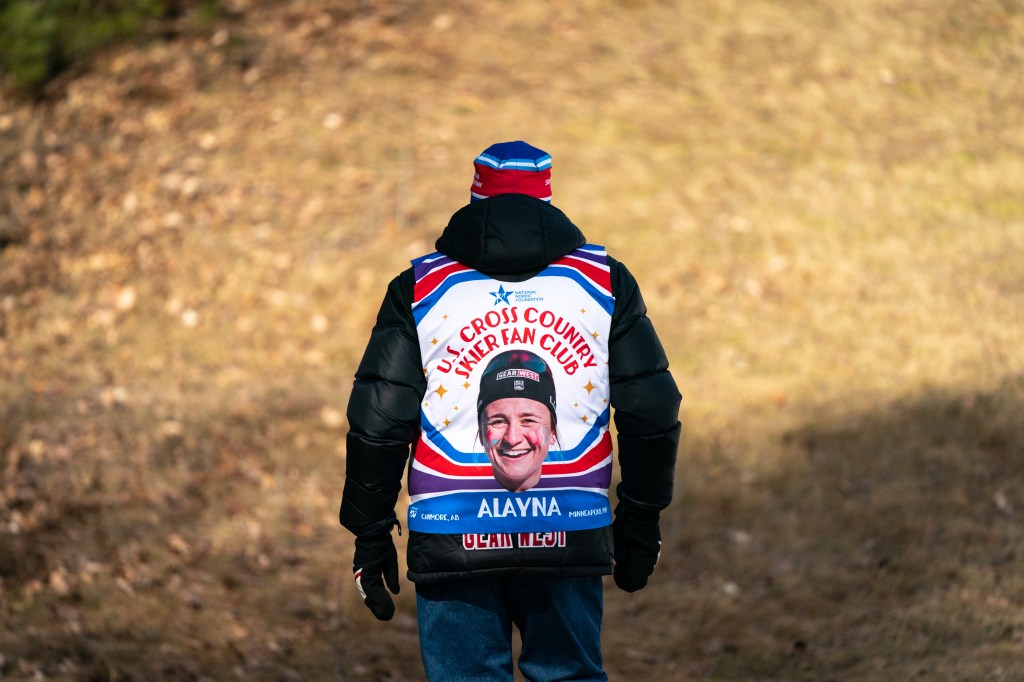
First off, I’d like to ask you a few questions about your history as a college skier. You skied at the University of Vermont, where you were runner up at the NCAA Skiing Championships in 2017.
What distances were men and women racing when you were in college?
This was before equal distance, and so women were racing 5ks and 15ks and men were racing 10ks and 20ks.
What implicit message, if any, do you think it sends when women’s race distances are shorter than men’s race distances?
It’s a tricky question. I think the underlying reason for women racing shorter distances was not meant to be harmful in any way. When there wasn’t equal distance, I think it was because there was just a lack of greater knowledge of what female athletes can do. Now we all understand that it’s possible for women to race just as far as men.
In college, I never felt that the lack of equal distance was because people didn’t think that we could do 10ks or could do 20ks. I never really thought of it that way. I think I thought of it more like a developing phase. In high school, the longest races I had done were 10ks. To go to college and to step up to the 15k, it felt like a very natural progression. So, I guess I never really questioned it too much.
Now that there is equal distance, it makes so much sense. I am very happy about the equal distance and proud of it. I think it’s just taken our community time to realize that it’s not a big deal for women to race just as far as men.
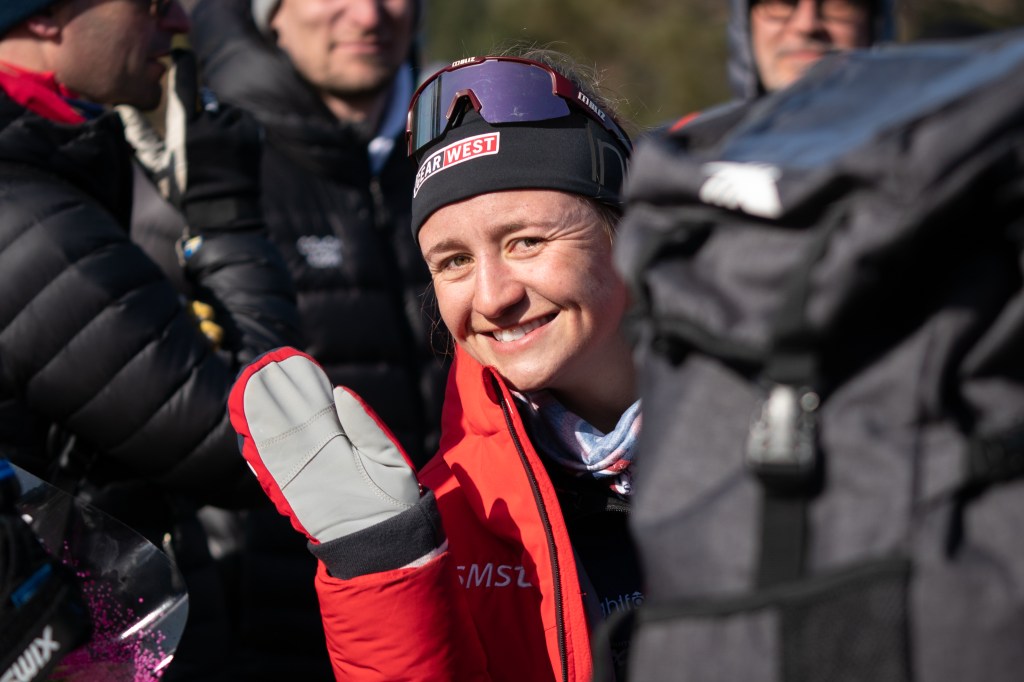
If women had been able to race the 20k distance in college, what would that have been like for you personally?
I think it would have been awesome. In college, I was definitely better at distance skiing, and so it would have been really exciting to do some 20ks.
While I love that we now ski equal distances, I also see that college racing and World Cup racing are a little bit stuck now. It’s 10ks and 20ks, and that’s it. That’s the only variation there is. I would love to see both men and women racing 5ks and 15ks as well. I love the variety in racing distances and techniques.
In college, I was definitely better at distance skiing, and so it would have been really exciting to do some 20ks.
Back in 2019, you were fresh out of college when you first raced — and won — the American Birkibeiner, becoming the youngest winner at age 22.
What led to your interest in skiing the Birkie?
I grew up in a suburb of Minneapolis, Minnesota. I had been part of Birkie week since I was born. My parents were Birkie skiers. My older sister, younger brother and I skied the Barnebirkie and then the Jr. Birkie and then the Prince Haaken and then the Kortelopet.
My senior year in high school, I was still 17. You have to be 18 to race the Birkie and so I never had a chance in high school to race the Birkie, but I always wanted to. I grew up with the thought that the American Birkibeiner was the pinnacle of ski racing, so I was bummed that I didn’t get to ski it in high school.
I went to college out East and didn’t have the chance to race the Birkie until I graduated. In 2019, when I was able to race the Birkie, it was really full circle for me because it was everything that I’d looked up to as a kid in ski racing.
Did you have any role models who were skiing the Birkie or other ski marathons?
Definitely my family. My parents are Birchleggers. They’ve done over 20 — almost over 30 — Birkies now. My older sister has always been a role model to me. In 2017, she placed 6th in the Birkie, and that was super exciting to see her have that success there. I was really inspired by my own family.
I felt like the Birkie was in my blood, and I wanted to be part of that family Birkie experience.
Did your sister continue to ski later in life?
Yeah! She did the Birkie this year. She placed 17th I think. She’s had some great Birkie results over the years and does lots of other ski marathons throughout the Midwest each winter.
What do you enjoy about racing the ski marathon distance that is different than what you get from shorter race distances?
I think there’s a different energy around the ski marathon races. I wouldn’t say it’s less intense, but I think it’s maybe more fun. Everyone’s there to have a good time. You’re out there with a ton of other citizens who are racing as well, and they bring so much enthusiasm and excitement. You’re all kind of in it together. I’m in races with my sister and my dad and my mom, and I think that type of camaraderie brings out a different type of energy.
It doesn’t take away from the intensity — at least not at my level. I take it very seriously. It is still very intense in the elite wave, but there’s also the community that’s backing you. It’s very evident. The community is part of it with you.

Last year, you were part of the first ever women’s World Cup 50k — the Holmenkollen 50k in Norway. You were given a start spot along with Jessie Diggins, Rosie Brennan and Hailey Swirbul.
How were you chosen to be one of four skiers to represent the U.S. at the first women’s World Cup 50k?
Yeah, I raced in many World Cup races during the first half and middle of last year’s World Cup season. Based on my World Cup results and Birkie results, they gave me a start spot at Holmenkollen 50k. I’ve always been a pretty strong skate distance skier, so the fact that Holmenkollen 50k was a skate race and I had at that point won the Birkie four times, it was pretty natural to get that spot. I was very excited and honored to be a part of that event.
Why did you want to be a part of the first women’s World Cup 50k?
I was excited to be a part of history, and a 50k skate race is something I have always loved. I had never raced at Holmenkollen previously, and it’s an iconic event with massive crowds and crazy challenging uphills that really test athletes. To me, it was another challenge and I knew it was going to take a lot of courage to toe that line. That’s what definitely excites me about ski racing: looking for the next challenge that I can reach towards.
I was excited to be a part of history, and a 50k skate race is something I have always loved.
Holmenkollen is known for its enthusiastic crowds, right?
Yes, absolutely!
Were the Hollenkollen crowds paying attention to the fact that this was the first women’s World Cup 50k?
I believe so. Again, this was my first time experiencing Holmenkollen, so I don’t have anything to compare it to from previous years.
In the past, the men have typically raced on Saturday, and the women have typically raced on Sunday. Because of that, the crowds on Saturday are extreme. They are crazy — so much energy. Typically, they get so exhausted from cheering for the men on Saturday that many of them don’t make it back to watch the women on Sunday.
They’ve started now switching things every other year. So this year, the women will race on Saturday and the men will race on Sunday.
But last year, the women raced on Sunday, and I was told: “The crowds were out yesterday. You shouldn’t expect the same crowds because people are hungover and they’re exhausted.” But I would say, there was obviously less of a crowd on Sunday, but it was still mind-blowing, the level of excitement and enthusiasm, and I think that was because we were racing the first women’s World Cup 50k and there were so many people that were excited to watch and cheer and encourage us women. So, kind of a mixture there.

It sounds like you are not going to race Holmenkollen again this year. What are your plans this year?
I’m going to go race the Engadine Skimarathon, which is a 42K ski marathon in Switzerland. It’s also a skate race, and I’m a little stronger at skate skiing. I’m excited for that marathon.
Have you raced other ski marathons besides the Birkie and the World Cup 50k?
They’ve started including more ski marathons in the Supertour circuit, so for example, for the past two years, we’ve raced a 42k at the end of March. I’ve also done the Mora Vasaloppet ski marathon quite a few times.
How does skiing the Birkie fit into your overall race season — a season that includes shorter distance races and, often, World Cup races in Europe?
It kind of varies from year to year, depending on which World Cup races I have the opportunity to race. In 2020, I did not have the opportunity to ski the Birkie because I was busy racing World Cup races in Europe. That’s the only Birkie that I’ve missed.
Typically, I don’t know if I’m going to be able to race the Birkie until a couple weeks before. But, once I know that I’m racing the Birkie, I get so excited.
Final question for you… What tips or encouragement would you give to an athlete who has raced a 10k pursuit in high school and is considering jumping up in distance to race a ski marathon?
I would definitely encourage fueling. It’s the biggest piece of the puzzle. If you’re not used to fueling during a race, then I would strongly recommend practicing it during a workout or during a training race.
The first 30k is probably going to feel like you’ve got it no problem. If you have not been fueling throughout those first 30k, then you’re going to bonk at 35k. If you’ve been putting the money in the bank early on, then it’s going to be there later so that during the last 5 to 10k you’ve still got energy and you can make it to the finish line in good shape.

 Onward
Wonderful article!!