

Pam Reed is a trail running legend. Pam was one of the first women seriously training for and racing ultras in the 1990s and 2000s. She ran her first 100 miler — Wasatch 100 — in 1992. Pam is best known for her outright Badwater 135 wins in 2002 and 2003, where she beat Dean Karnazes.
Pam Reed was not only a trailblazer in regard to her running accomplishments. She was also a trailblazer in regard to racing ultras while raising three sons. She helped pave the way for moms today to run ultras and not be perceived as “crazy” or “eccentric” for choosing to do so.
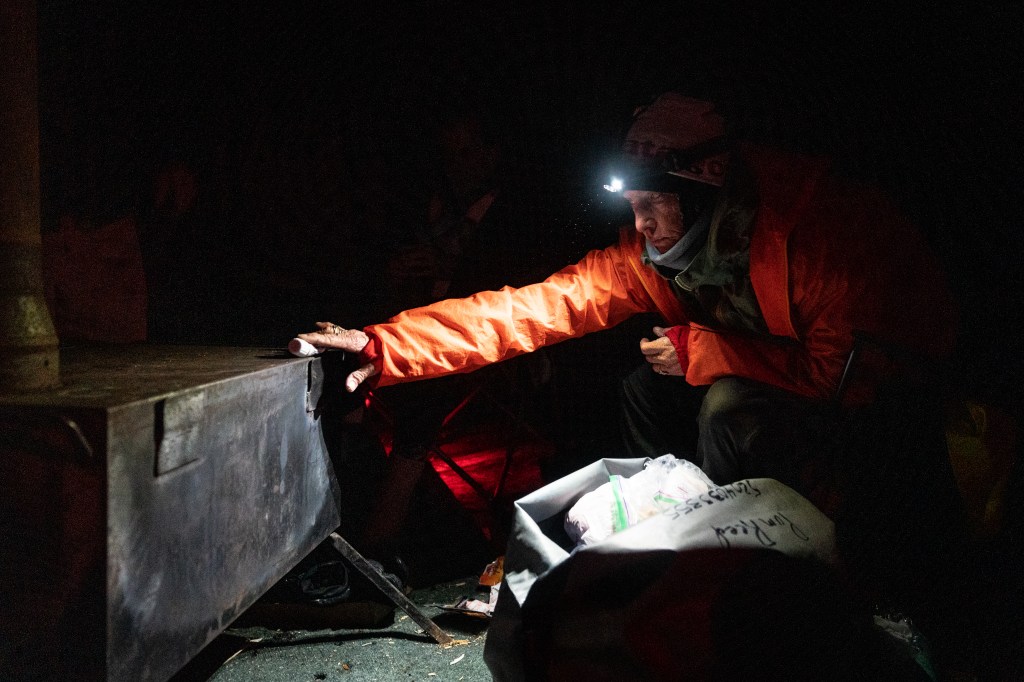
At age 62, Pam Reed shows no signs of slowing down. I spoke with Pam after this year’s Arrowhead 135: a remote 135 mile winter ultra in Northern Minnesota. Arrowhead 135 was Pam’s 114th 100 miler! In this interview, we talk about the draw of Arrowhead 135, people questioning her 2002 Badwater 135 win, and the choice to run ultras as a mom.
You’ve run Arrowhead 135 — a 135 mile winter ultra in Northern Minnesota — the past 7 years. What keeps you returning to Arrowhead 135?
Arrowhead to me is like old school ultra running. It’s so barebones, and I love the people there. I really like Midwestern people. They’re just so real and hardcore. No bullshit. I just can’t say enough about it.
Ken [the race director] he’s just so matter of fact. He doesn’t make a big deal about anything. It’s just cool. I love it.
What makes Arrowhead 135 “old school”?
There’s no hype around it. It feels like everyone is on an equal playing field. They don’t make a big deal about the winners. You just have to finish it. I like that.
Do you have a favorite or craziest memory from Arrowhead 135?
Yeah, what happens to me in these winter races in particular is that I just start hallucinating. I just start seeing all these things.
What was funny was that this year Carla was with me and, with our language barrier, I couldn’t tell her about them. Over here, I was seeing wolves and then I’d see people having lunch… I’d just see all these things, and I knew they weren’t real. I’d get up to them and they were just little piles of snow… and I couldn’t tell Carla.

You trained for and raced ultras while raising three sons. What was valuable about running ultras that made it worth taking time away from your kids?
I’m the kind of person that I’m so hyper. I have so much energy that I think ultra running made me a better mom. That might sound like a cop out. I got to burn a lot of energy out by running, so I wouldn’t be so over the top.
The other thing is that I wanted to show my sons — and I hope they see that — I wanted to show them that when you work really hard, you can do things. You can do hard things, but it takes a lot of work and dedication.
All my kids for sure are all really hard workers. I’m really proud about that.
When I wrote my book, you have no idea how many people wrote that I must be a bad mom because I run a lot. And Dean [Karnazes]… What about men? They don’t get that. It doesn’t even come up. So, it was just really frustrating.
In 2002, you won Badwater 135 outright. At the time, some people thought it was suspicious that a woman had won the race. Could you explain? What was that like?
Yeah, they thought I was cheating because I was a woman and because I won by so much. That’s what they were going on.
Hands down, the reason I won is that they didn’t know how to take care of their runners, and my crew chief Chuck Giles was a lawyer, a smart guy and totally into bike riding… He helped out with RAAM (Race Across America). He came up with a system that attached to the crew van and sprayed me with water. It was so innovative.
They were spraying me down every 1/2 mile to every 3/4 of a mile, which, by the way, my crew did for me this year too. It’s decadent and it’s really hard on the crew, but that’s how you’re going to do better.
At that time, were there other women who had done really well compared to men in other ultras?
Interesting… Yeah, Ann Trason. She’s just ridiculous amazing, but not many.
So a woman winning outright was kind of new and taking care of your body in the heat was kind of new, so both of those things…
I loved hot. I came to Tucson when I was 21 years old, and I went to a physiology class and the teacher said, “You can get acclimated.” So, that put the idea in my head.
I started running 3 times a day: I ran in the morning, at noon, and at 3 or 4 o’clock. We all know that 3 or 4 o’clock is when it’s the absolute hottest, and so I trained. I did that every day for years.
I didn’t do Badwater 135 until I was 40. I started ultra running when I was 28, so there were a lot of years in there to acclimate to the heat.
In 2003, you returned to Badwater 135. You’ve mentioned that you felt pressure to prove that your 2002 win hadn’t been a fluke. Where did that pressure come from?
Well, my goal was to win. Honestly, I just thought I was going to win because I thought nobody’s going to come this close to me. Then, from the get go Dean Karnazes was there and this other guy from New York, and they were ahead of me. I told my crew, “Oh my gosh, I’m going to take third.” So my brain was thinking overall winning.
I was listening to a podcast with a woman, and they were expecting her to win the whole thing. It was Ann Trason. And it’s like… Why do I have to do this? Why do I have to go up against everybody?
So it sounds like you’re saying you shouldn’t have put pressure on yourself to beat all the men too, but you were kind of doing that.
Yeah. Right.
I really believe that for all people at every level, you just do the best you can. You can’t worry about other people.
In 2003, were Dean Karnazes or others explicitly trying to beat you?
Yeah! Oh yeah!
They were ahead of me until I passed Dean at around mile 50 at Hounds Pass. He was sick. He was throwing up on the side of the road. The next guy, I caught him at mile 100, and he was dying. He was so hot. Then, I thought I had it in the bag until the race director came up to me and told me, “Dean’s only 20 minutes behind you.” So, that was scary.
You know what’s funny… When I beat Dean, back then he was kind of full of it a little bit. He said, “I’m really happy to have been beaten by Pam.” And then, of course, he came back the next year and said: “I’ve got to win.”
Nobody is happy to be beaten by anybody.
In your book, you mentioned that you have felt a difference between how men and women who run ultras are perceived. A man who runs a lot is perceived as someone who is devoted to running. A woman who runs a lot is perceived as “eccentric, to put it kindly.” Could you elaborate?
It’s still like that for me. Everybody thinks I’m crazy. They look at me, and they just think I’m crazy.
What I think I really meant too…
When I wrote my book, you have no idea how many people wrote that I must be a bad mom because I run a lot. And Dean… What about men? They don’t get that. It doesn’t even come up. So, it was just really frustrating.
Nowadays, of my three sons, two of them have children and they are amazing dads. I have to say, men nowadays seem way more involved with their children than they were when I had kids. Maybe that was just my experience.
I think it’s improving, and I think it’s staying the same. I think it’s both.
Is it both? Yeah, I’m sure.
I run 100 milers, and I was having a conversation with my friends who run half marathons. They said, “Of course women aren’t running 100 milers because they don’t have time to do that and be moms.”
Right right right…
…and I was thinking, “but I am.”
I know. You know, it’s a choice. And absolutely there are sacrifices. There’s a cost to everything you do.
I look at it like life is way too short. You don’t know if you’re going to have that chance again. You just don’t know.
Did you have any role models you were looking up to when you first started ultra running? Who was inspiring you?
Umm… I would hear about Ann Trason, but I felt like I was not even on the same playing field as her. I still don’t. People will say “you’re a legend,” and I don’t see myself like that at all. I just see myself as getting out there and doing the best I can.
How would you like moms who choose to run ultras to be perceived?
I would say… Amazing! Go for it! Don’t listen to the naysayers.
…and you feel guilty. The second I had a baby, I felt guilty. Good for people who don’t because I always felt guilty. Am I doing the wrong thing? It’s hard. It’s difficult. I still think you have to get out there and show your kids what can be done.
I hate to say this, but I think women can be the hardest on women sometimes. We have to give everybody a break.
It seems like a lot more women are coming out, and they’re speaking about it. Have you heard about the podcast Trail Society? It’s good. It’s really good. Just this week, they interviewed Rachel Drake and she just had a baby and she’s going to be a doctor. It’s cool!

Any final thoughts you’d like to share with women considering racing Arrowhead 135?
If you can do Arrowhead 135, you can do anything. I mean Arrowhead 135 is hard — mentally and physically — a hard thing to do. You’re out there by yourself. It’s incredible. It’s a confidence builder. It really sets those who do it — women and men — apart from the normal ultra runner.

 Onward
Leave a comment